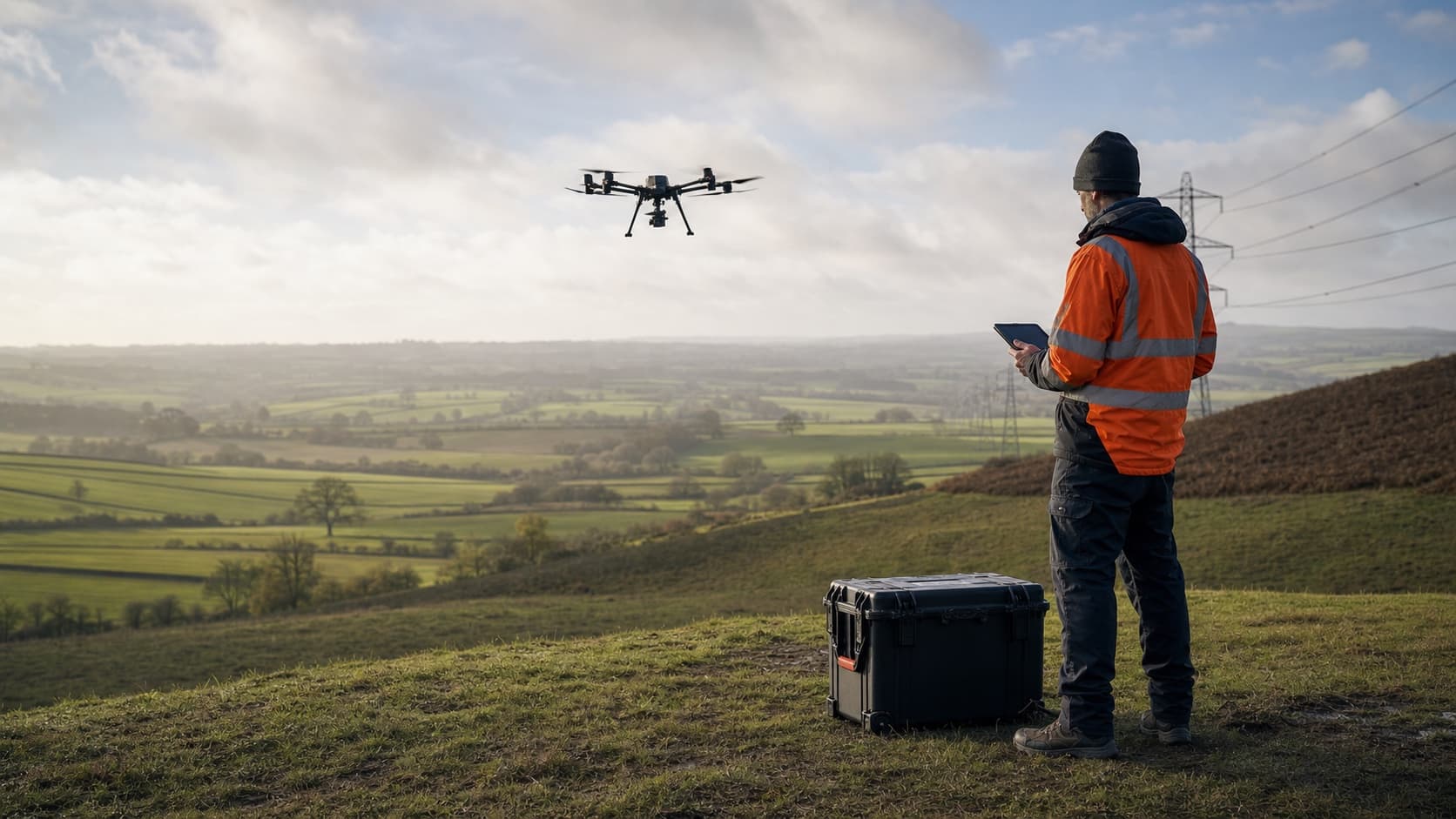
Terrain-aware drone mission planning
SighThor gives drone operators a terrain-aware VLOS and BVLOS planning workflow with multi-observer route analysis and export-ready evidence.
Context
VLOS & BVLOS
Exports
PDF/KML/KMZ/CSV
Audience
Commercial operators

Pain Points
Why route visibility analysis is still too manual
Operators often have terrain data, but not a workflow that turns it into route-specific observer evidence.
Expensive pre-survey guesswork
Manual LOS surveys cost time and money before you even know whether the route is viable.
Flat-map planning tools
Generic drone planning tools can visualise the route, but they do not explain where the terrain breaks observer visibility.
Missing evidence trail
Regulators and internal safety teams need evidence, not just a claim that the route should be fine.
Feature Deep Dive
What the drone workflow is built to answer
The goal is to make visibility assumptions inspectable before people and equipment are deployed.

Terrain-aware route visibility
The route is segmented by what the observer network can actually see, not by guesswork or line drawings on a flat map. Place pilot and relay observers to close gaps and compare route coverage before field deployment.
Elevation-sampled LOS at 30 m resolution
Blocked segment review
Identify exactly where the route breaks and use that insight to move observers or change operating assumptions. The workflow is oriented around VLOS and BVLOS justification, not generic recreational route planning.
Clear vs blocked segment classification per observer
Evidence exports for mission packs
Export map-backed PDF, KML, KMZ, CSV, and GeoJSON outputs for mission packs, waiver material, or internal review. The output is structured for mission review, regulator-facing evidence, or customer communication.
PDF + KML + KMZ + CSV + GeoJSON + PNGWorkflow
Route analysis in four stages
Build the geometry, test the assumptions, refine the observer plan, and export the evidence.
- 01
Create a drone project, navigate to the operating area, and add the route waypoints.
- 02
Place the pilot or ground observers where you expect to maintain visibility.
- 03
Run LOS analysis at the planned altitude and inspect clear versus blocked segments.
- 04
Adjust the observer network or route, then export the evidence package for review.
Regulatory Context
Designed to support evidence-heavy operational review
SighThor is not legal advice, but it is built to produce the route visibility artefacts that teams repeatedly need when documenting higher-friction operations.
FAA Part 107 / future waiver workflows
Use the exported evidence to support visibility reasoning and mission planning conversations for operations in the United States.
UK-SORA and UK CAA operations
The workflow maps cleanly onto UK-style evidence needs where visibility and terrain context must be documented.
EASA SORA-aligned operations
SighThor provides the line-of-sight analysis artefacts that commonly support SORA-style operational planning in Europe.
JARUS-oriented global teams
For operators working across multiple jurisdictions, the route evidence stays consistent even when the paperwork changes.
Comparison
A planning workflow built for route visibility, not just flight admin
SighThor sits in the gap between generic route planners and costly bespoke field surveys.
| Capability | SighThor | Typical alternative |
|---|---|---|
| Terrain-aware observer LOS | Yes. Route coverage is segmented by terrain visibility. | Common flight planning tools usually do not provide this. |
| Multiple observer modelling | Yes. Pilot and relays can be placed and compared. | Often unsupported or manual. |
| Operational evidence exports | PDF, KML, KMZ, CSV, GeoJSON, PNG. | Usually screenshots plus manual notes. |
| Regulatory context | Built around VLOS/BVLOS evidence needs. | Built around flight logging or route management. |
| Consultancy replacement potential | Early viability checks happen in-house before field spend. | External survey or manual review often required. |
Analyse the route before you spend the field day.
Use SighThor to test observer layouts, expose terrain-driven gaps, and produce the map-backed outputs your team can actually review.